
π Q1. According to you, whose statement is correct and why? (Page No. 215)
π Statement 1: The cow is standing in the Sun. But it does not mean that it is getting energy from the Sun.
π Statement 2: The cow is eating grass. Grass leaves need sunlight to grow. So, the main source of energy is the Sun. This way the cow gets energy from the Sun.
π¬ Answer:
π Statement 2 is correct. π
π A cow gets energy from the grass it eats, and the grass makes its food using sunlight through photosynthesis. πΏ
So, the cow indirectly gets energy from the Sun by eating plants that store solar energy as food. βοΈβ‘οΈπΏβ‘οΈπ
π A cow gets energy from the grass it eats, and the grass makes its food using sunlight through photosynthesis. πΏ
So, the cow indirectly gets energy from the Sun by eating plants that store solar energy as food. βοΈβ‘οΈπΏβ‘οΈπ
π‘ Did You Know?
All living beings β even humans β get their energy from the Sun, either directly (plants) or indirectly (animals that eat plants)! ππ
Q2.β What will happen if the Sun is not visible for a few days? (Page No. 216)
1οΈβ£ We may have to depend on artificial lighting during daytime also.
2οΈβ£ _______________
3οΈβ£ _______________
2οΈβ£ _______________
3οΈβ£ _______________
π¬ Answer:
1οΈβ£ We may have to depend on artificial lighting during daytime also. π‘
2οΈβ£ Plants will not be able to make food through photosynthesis because they need sunlight to prepare their food. πΏ
3οΈβ£ The weather will become very cold, and animals and humans may find it difficult to survive due to lack of warmth. βοΈ
2οΈβ£ Plants will not be able to make food through photosynthesis because they need sunlight to prepare their food. πΏ
3οΈβ£ The weather will become very cold, and animals and humans may find it difficult to survive due to lack of warmth. βοΈ
π‘ Did You Know?
The Sun is the ultimate source of energy for all living things β it gives us light, heat, and life! ππ
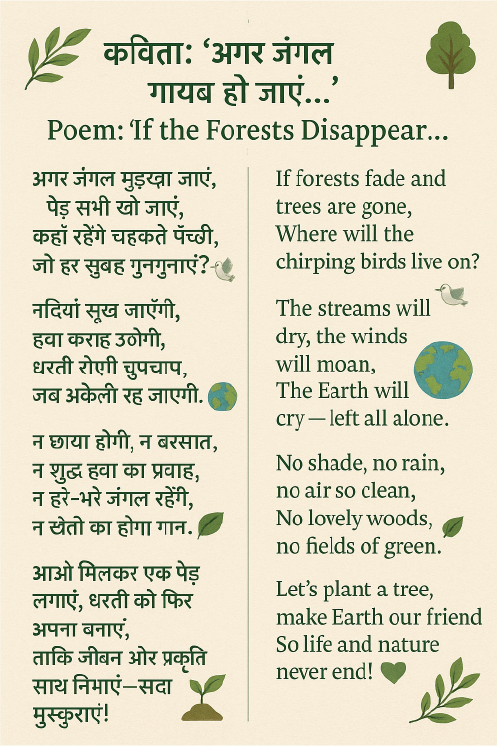
π² Q3.β What are the consequences of cutting a large forest area? (Page No. 217)
π¬ Answer (Explanation):
Cutting down large forest areas is called deforestation. It has many harmful effects:
1οΈβ£ Loss of habitats for animals ππ¦
2οΈβ£ Increase in carbon dioxide and decrease in oxygen π«οΈ
3οΈβ£ Soil erosion and floods due to lack of tree roots π§οΈ
4οΈβ£ Less rainfall and hotter climate βοΈ
5οΈβ£ Loss of biodiversity β plants and animals may die or disappear β οΈ
1οΈβ£ Loss of habitats for animals ππ¦
2οΈβ£ Increase in carbon dioxide and decrease in oxygen π«οΈ
3οΈβ£ Soil erosion and floods due to lack of tree roots π§οΈ
4οΈβ£ Less rainfall and hotter climate βοΈ
5οΈβ£ Loss of biodiversity β plants and animals may die or disappear β οΈ
π‘ Did You Know?
Forests are called the βlungs of the Earthβ β they breathe in carbon dioxide and breathe out oxygen, keeping our planet alive! ππ³
π€ Let us enhance our learning πΒ
π Q.1. Given diagram shows items related to natural resources. Match them with their jumbled-up names. Make another table and write the names of these resources. Classify these resources as renewable or non-renewable.
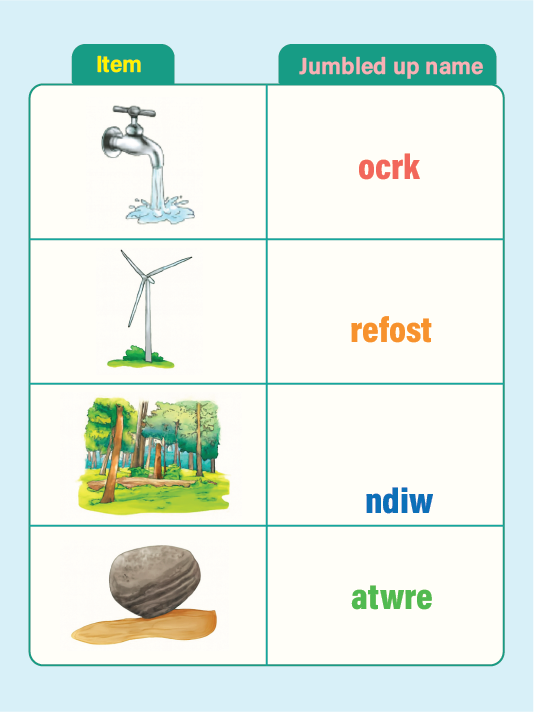
(Match them with their jumbled up names)
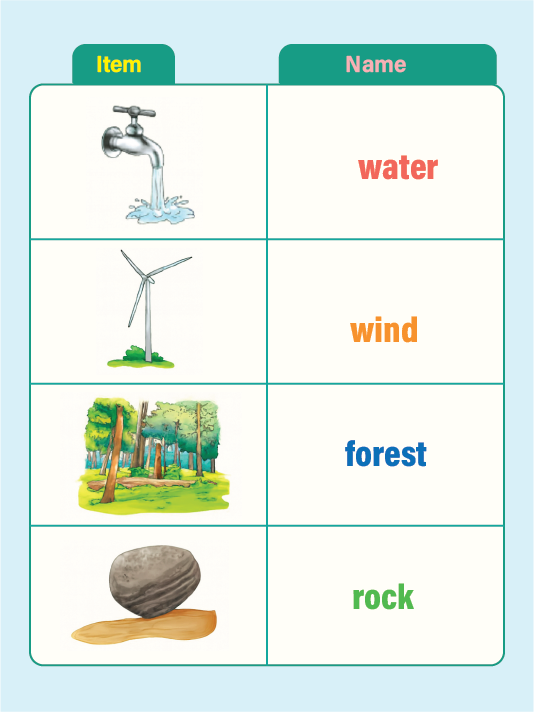
π¬ Answer:
(the names of these resources)
| Resource | Category |
|---|---|
| Water π§ | Renewable resource β»οΈ |
| Wind π¨ | Renewable resource β»οΈ |
| Forest π³ | Renewable resource β»οΈ |
| Rock πͺ¨ | Non-renewable resource βοΈ |
β
Explanation:
π Water and π¨ Wind can be naturally replenished β Renewable.
π³ Forest regrows through natural processes β Renewable.
πͺ¨ Rock takes millions of years to form β Non-renewable.
π Water and π¨ Wind can be naturally replenished β Renewable.
π³ Forest regrows through natural processes β Renewable.
πͺ¨ Rock takes millions of years to form β Non-renewable.
πΏ Q2. β State whether the following statements are True [T] or False [F].
If False, correct them.
π¬ Answer:
(i) β
True β Nature provides air, water, sunlight, soil, and minerals that fulfill our basic needs. π
(ii) β False β Machines are man-made resources, created using natural materials. βοΈ
(iii) β True β Natural gas is a non-renewable resource. It cannot be replaced quickly once used; it takes millions of years to form. β½
(iv) β True β Air is a renewable resource. It is naturally available and keeps getting renewed through the atmosphere. π¨
(ii) β False β Machines are man-made resources, created using natural materials. βοΈ
(iii) β True β Natural gas is a non-renewable resource. It cannot be replaced quickly once used; it takes millions of years to form. β½
(iv) β True β Air is a renewable resource. It is naturally available and keeps getting renewed through the atmosphere. π¨
π‘ Did You Know?
Resources like sunlight, wind, and water never run out β but coal, oil, and natural gas might, if we donβt use them wisely! ππ¨π
β‘ Q.3. Fill in the blanks using the most appropriate option β
(i) A fuel that is commonly used in two-wheelers like scooters or bikes is ___________.
(a) Kerosene
(b) Petrol
(c) Diesel
(d) LPG
(a) Kerosene
(b) Petrol
(c) Diesel
(d) LPG
β
Answer: (b) Petrol β½
π‘ Explanation: Two-wheelers run mainly on petrol engines, which burn fuel to produce energy for movement. π΅
(ii) An example of a renewable resource is ___________.
(a) Coal
(b) Water
(c) Natural gas
(d) Petrol
(a) Coal
(b) Water
(c) Natural gas
(d) Petrol
β
Answer: (b) Water π§
π‘ Explanation: Water is a renewable resource because it keeps recycling naturally through the water cycle β evaporation, condensation, and rainfall. π¦οΈ
π‘ Did You Know?
Unlike coal and petrol, renewable resources like sunlight, air, and water never get exhausted β theyβre Earthβs endless gifts! πβοΈπ¨
πΏ Q.4. Classify the following as renewable or non-renewable resources β coal, natural gas, forests, and minerals.
π¬ Answer:
β’ Renewable resources: Forests π³
β’ Non-renewable resources: Coal βοΈ, Natural gas β½, Minerals π
π‘ Explanation: Renewable resources like forests can grow again over time, but coal, natural gas, and minerals take millions of years to form β once used, theyβre gone for a long time. β³
β½ Q.5. Why do we say that petroleum is a non-renewable resource?
π¬ Answer:
Petroleum is a non-renewable resource because it takes millions of years to form deep under the Earthβs surface. π
We are using it much faster than nature can produce it. Once exhausted, it cannot be replaced easily.
π‘ Did You Know?
Petroleum is also called βblack goldβ because itβs precious and used in fuels, plastics, and many products. π’οΈπ°
π² Q.6. It is difficult to regrow forests. Justify this statement.
π¬ Answer:
Regrowing forests takes a very long time because:
1οΈβ£ Trees need years to grow fully. π³
2οΈβ£ Many animals lose homes, making the ecosystem weak. πΏοΈ
3οΈβ£ The soil becomes poor due to erosion after trees are cut. π§οΈ
Hence, restoring a forest takes decades β which is why itβs better to protect existing forests. πΏ
1οΈβ£ Trees need years to grow fully. π³
2οΈβ£ Many animals lose homes, making the ecosystem weak. πΏοΈ
3οΈβ£ The soil becomes poor due to erosion after trees are cut. π§οΈ
Hence, restoring a forest takes decades β which is why itβs better to protect existing forests. πΏ
π‘ Did You Know?
It can take over 50β100 years for a destroyed forest to return to its original condition! β³π³
π§ Q.7. Make a list of five daily activities in which you use natural resources. Suggest ways by which you can reduce their use.
π¬ Answer:
| Daily Activity | Natural Resource Used | Way to Reduce Use |
|---|---|---|
| Bathing πΏ | Water π§ | Take shorter showers |
| Travelling π΄ | Petrol β½ | Use bicycles or share rides |
| Using lights π‘ | Electricity β‘ | Switch off lights when not needed |
| Writing βοΈ | Paper π | Use both sides of paper |
| Cooking π² | LPG π₯ | Cook on medium flame and cover pots |
π‘ Did You Know?
Small steps taken daily can save thousands of litres of water and kilowatts of energy each year! ππͺ
π¬οΈ Q.8. List four activities that are possible due to the presence of air.
π¬ Answer:
1οΈβ£ Breathing β Air gives oxygen for living beings to survive. π«
2οΈβ£ Flying kites or airplanes β Air helps in lift and movement. πͺβοΈ
3οΈβ£ Burning of fuels β Needs oxygen from air to produce heat. π₯
4οΈβ£ Winnowing β Air separates lighter husk from heavier grains. πΎπ¨
2οΈβ£ Flying kites or airplanes β Air helps in lift and movement. πͺβοΈ
3οΈβ£ Burning of fuels β Needs oxygen from air to produce heat. π₯
4οΈβ£ Winnowing β Air separates lighter husk from heavier grains. πΎπ¨
π‘ Did You Know?
Air contains 78% nitrogen, 21% oxygen, and a small amount of carbon dioxide and other gases! ππ¨
π± Q.9. How can you contribute towards enhancing the green cover of your locality? Make a list of actions to be taken.
π¬ Answer:
1οΈβ£ Plant trees in parks, roadsides, and school campuses. π³
2οΈβ£ Avoid wasting paper β it reduces the need to cut trees. π
3οΈβ£ Join local tree-planting drives or start one with friends. π€
4οΈβ£ Water and protect young plants regularly. π§
5οΈβ£ Spread awareness about the importance of greenery. π’
2οΈβ£ Avoid wasting paper β it reduces the need to cut trees. π
3οΈβ£ Join local tree-planting drives or start one with friends. π€
4οΈβ£ Water and protect young plants regularly. π§
5οΈβ£ Spread awareness about the importance of greenery. π’
π‘ Did You Know?
Planting even one tree every month can make a big difference β trees cool the air, attract rain, and keep the planet alive! π¦οΈπ
π Q.10. In the given illustration, we see that food is being cooked.
Answer the following questions β
(i) What type of energy is being used for cooking?
(ii) Name one benefit and one drawback of using this type of energy for cooking.
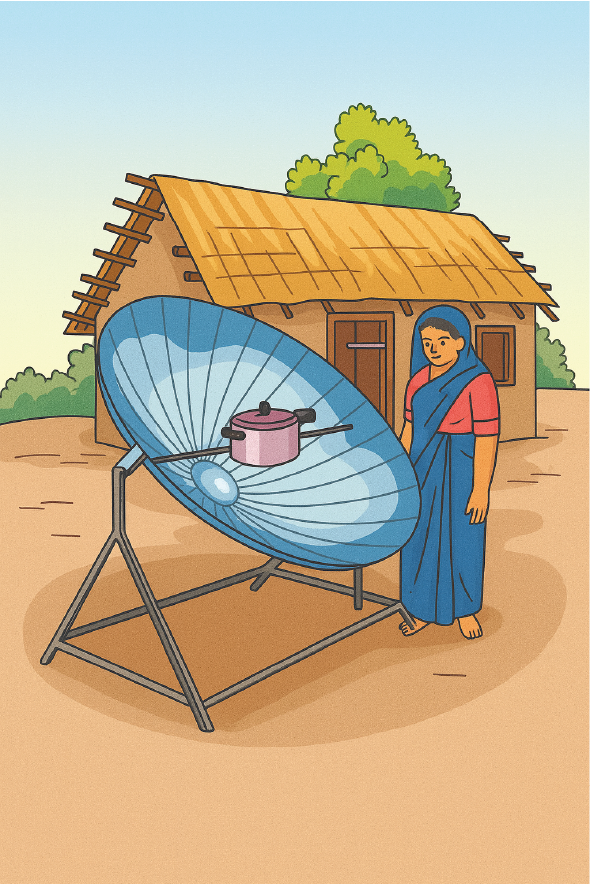
βοΈ Solar cooker using sunlight to cook food.
π¬ Answer:
(i) The type of energy being used for cooking is solar energy. βοΈπ²
(ii) Benefit: Solar energy is renewable and free of cost. It does not cause pollution and helps save fuels like LPG or wood. πΏ
Drawback: It cannot be used on cloudy or rainy days, and cooking takes more time than using regular stoves. β β³
(ii) Benefit: Solar energy is renewable and free of cost. It does not cause pollution and helps save fuels like LPG or wood. πΏ
Drawback: It cannot be used on cloudy or rainy days, and cooking takes more time than using regular stoves. β β³
π‘ Did You Know?
A solar cooker uses mirrors to focus sunlight and convert it into heat energy β enough to boil water, cook rice, or even bake biscuits! πͺβοΈ
π² Q.11. Cutting down trees on a large scale impacts the quality of the soil. Why do you think it is so? π
π¬ Answer:
When trees are cut down, their roots no longer hold the soil firmly. πΏ
As a result, rainwater washes away the top layer of soil, which contains nutrients needed for plant growth. π§οΈ
This process is called soil erosion.
Over time, the soil becomes poor in quality, less fertile, and unable to support healthy vegetation. πΎ
As a result, rainwater washes away the top layer of soil, which contains nutrients needed for plant growth. π§οΈ
This process is called soil erosion.
Over time, the soil becomes poor in quality, less fertile, and unable to support healthy vegetation. πΎ
π‘ Did You Know?
Tree roots act like natural anchors β they hold the soil in place and help recharge groundwater. π³π§
π¨ Q.12. Explain two ways in which human activities pollute the air. Propose one action which can help in reducing air pollution. π«οΈ
π¬ Answer:
π Two Ways Humans Pollute the Air:
1οΈβ£ Smoke from Vehicles: Cars, buses, and trucks release harmful gases like carbon monoxide and smoke, which pollute the air and cause breathing problems. ππ¨
2οΈβ£ Burning of Fuels and Waste: Factories and households burn coal, wood, and garbage, releasing toxic gases and soot into the air. ππ₯
1οΈβ£ Smoke from Vehicles: Cars, buses, and trucks release harmful gases like carbon monoxide and smoke, which pollute the air and cause breathing problems. ππ¨
2οΈβ£ Burning of Fuels and Waste: Factories and households burn coal, wood, and garbage, releasing toxic gases and soot into the air. ππ₯
πΏ One Action to Reduce Air Pollution:
Plant more trees and protect green areas. π³
Trees absorb carbon dioxide and release oxygen, helping to clean the air naturally.
Plant more trees and protect green areas. π³
Trees absorb carbon dioxide and release oxygen, helping to clean the air naturally.
π‘ Did You Know?
One big tree can remove over 20 kilograms of dust and pollutants from the air every year! π²β¨
π Q.13. A family uses solar panels to generate electricity, a gas stove to cook food, and a windmill for pumping water from a well. What would happen if there were no sunlight for a week?
π¬ Answer:
If there were no sunlight for a week β
1οΈβ£ The solar panels would not work, as they need sunlight to produce electricity. β‘
2οΈβ£ The windmill may slow down, because wind movement depends partly on the Sunβs heat and air pressure changes. π¨
3οΈβ£ Plants would stop making food since they need sunlight for photosynthesis. πΏ
4οΈβ£ The weather would become cold and dark, and people would need to use artificial lights during the day. π‘
1οΈβ£ The solar panels would not work, as they need sunlight to produce electricity. β‘
2οΈβ£ The windmill may slow down, because wind movement depends partly on the Sunβs heat and air pressure changes. π¨
3οΈβ£ Plants would stop making food since they need sunlight for photosynthesis. πΏ
4οΈβ£ The weather would become cold and dark, and people would need to use artificial lights during the day. π‘
π‘ Conclusion: The Sun is the main source of energy on Earth β it helps generate light, wind, and even food energy for all living beings. πβοΈ
π‘ Did You Know?
Almost every form of energy β wind, solar, or food β can be traced back to the Sun! πβ‘οΈπ¨β‘οΈπΏβ‘οΈπ₯
Q14.β Fill up the blanks using the following terms β (fossil fuels, forest, air, petroleum, coal, water and nonrenewable resource)
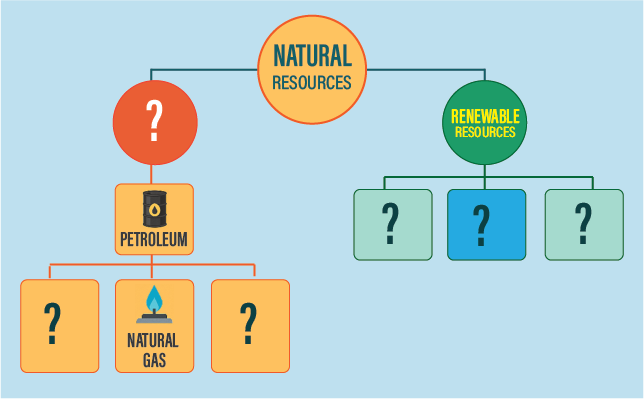
(Fill up the blanks with fossil fuels, forest, air, petroleum, coal, water and nonrenewable resource)
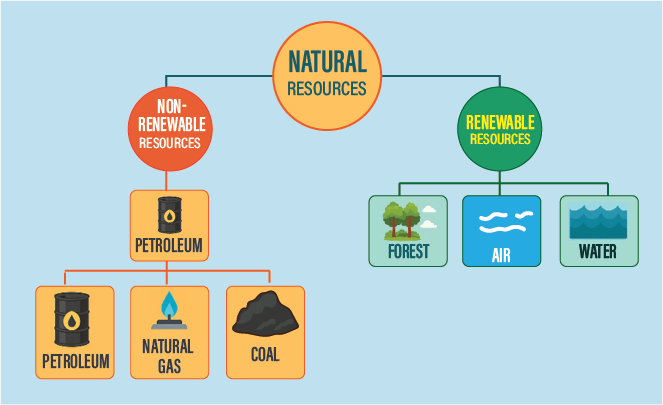
π¬ Answer:
(Fossil fuels, forest, air, petroleum, coal, water and nonrenewable resource)
π‘ Did You Know?
Fossil fuels like coal and petroleum are nonrenewable resources β once used, they take millions of years to form again.
π² Q.15. There is an increasing demand for trees to meet the requirements of industries and for housing.
Therefore, trees are being felled. Is it justified? Discuss and prepare a brief report. π
π¬ Answer:
πΏ Report on Tree Cutting and Its Effects
The cutting of trees to build houses or supply wood to industries is not justified if it is done without control or replantation.
Trees are essential for life β they give us oxygen, food, shelter, and rainfall, and help control pollution. π±
If trees are cut continuously:
1οΈβ£ The air becomes polluted as carbon dioxide increases. π«οΈ
2οΈβ£ Soil erosion and floods occur due to loss of roots. π§
3οΈβ£ Animals lose their homes, leading to loss of biodiversity. πΏοΈ
4οΈβ£ The climate becomes hotter and rainfall decreases. βοΈ
However, if trees are cut responsibly, and new trees are planted in place of the old ones, it can be balanced. π³
The cutting of trees to build houses or supply wood to industries is not justified if it is done without control or replantation.
Trees are essential for life β they give us oxygen, food, shelter, and rainfall, and help control pollution. π±
If trees are cut continuously:
1οΈβ£ The air becomes polluted as carbon dioxide increases. π«οΈ
2οΈβ£ Soil erosion and floods occur due to loss of roots. π§
3οΈβ£ Animals lose their homes, leading to loss of biodiversity. πΏοΈ
4οΈβ£ The climate becomes hotter and rainfall decreases. βοΈ
However, if trees are cut responsibly, and new trees are planted in place of the old ones, it can be balanced. π³
π‘ Conclusion:
Tree cutting should be done only when necessary, and planting new trees must always follow.
Protecting trees means protecting life β for us and for future generations. ππ
Tree cutting should be done only when necessary, and planting new trees must always follow.
Protecting trees means protecting life β for us and for future generations. ππ
π‘ Did You Know?
One big tree can supply oxygen for up to 10 people every day β imagine what a whole forest can do! π²π²
π¦ Q.16. Propose a plan to use less water in your school. What steps would you take to make this plan happen, and how would it help the environment? π
π¬ Answer:
π± My Water-Saving Plan for School
1οΈβ£ Check for Leaks: Regularly check and repair leaking taps, flushes, or pipes in classrooms and washrooms. π°
2οΈβ£ Use Buckets Instead of Running Taps: During cleaning, use buckets and mugs instead of leaving taps open. πͺ£
3οΈβ£ Install Tap Timers: Fit automatic or push taps that stop water flow quickly to avoid wastage. β±οΈ
4οΈβ£ Rainwater Harvesting: Set up a rainwater collection tank on the school roof to use for gardening and cleaning. π§οΈ
5οΈβ£ Awareness Drive: Start a βSave Water Clubβ β make posters, perform skits, and spread awareness among students. π¨π’
1οΈβ£ Check for Leaks: Regularly check and repair leaking taps, flushes, or pipes in classrooms and washrooms. π°
2οΈβ£ Use Buckets Instead of Running Taps: During cleaning, use buckets and mugs instead of leaving taps open. πͺ£
3οΈβ£ Install Tap Timers: Fit automatic or push taps that stop water flow quickly to avoid wastage. β±οΈ
4οΈβ£ Rainwater Harvesting: Set up a rainwater collection tank on the school roof to use for gardening and cleaning. π§οΈ
5οΈβ£ Awareness Drive: Start a βSave Water Clubβ β make posters, perform skits, and spread awareness among students. π¨π’
πΏ How it Helps the Environment:
β’ Saves freshwater for future generations. π§
β’ Reduces energy use in pumping and purifying water. β‘
β’ Helps plants and animals by keeping natural water sources full. πΈπΎ
β’ Teaches everyone to be responsible global citizens. π
β’ Saves freshwater for future generations. π§
β’ Reduces energy use in pumping and purifying water. β‘
β’ Helps plants and animals by keeping natural water sources full. πΈπΎ
β’ Teaches everyone to be responsible global citizens. π
π‘ Did You Know?
If every student saves just 1 litre of water per day, an entire school can save thousands of litres every month! π§π
π Explore More Class 6 Chapters (Questions and Answers)
πChapter 1 β The Wonderful World of Science
π¦Chapter 2 β Diversity in the Living World
π₯Chapter 3 β Mindful Eating
π§²Chapter 4 β Exploring Magnets
πChapter 5 β Measurement of Length & Motion
π§±Chapter 6 β Materials Around Us
π‘οΈChapter 7 β Temperature & Measurement
π§Chapter 8 β States of Water
βοΈChapter 9 β Methods of Separation
πΎChapter 10 β Living Creatures
πΏChapter 11 β Nature's Treasures
πChapter 12 β Beyond Earth
